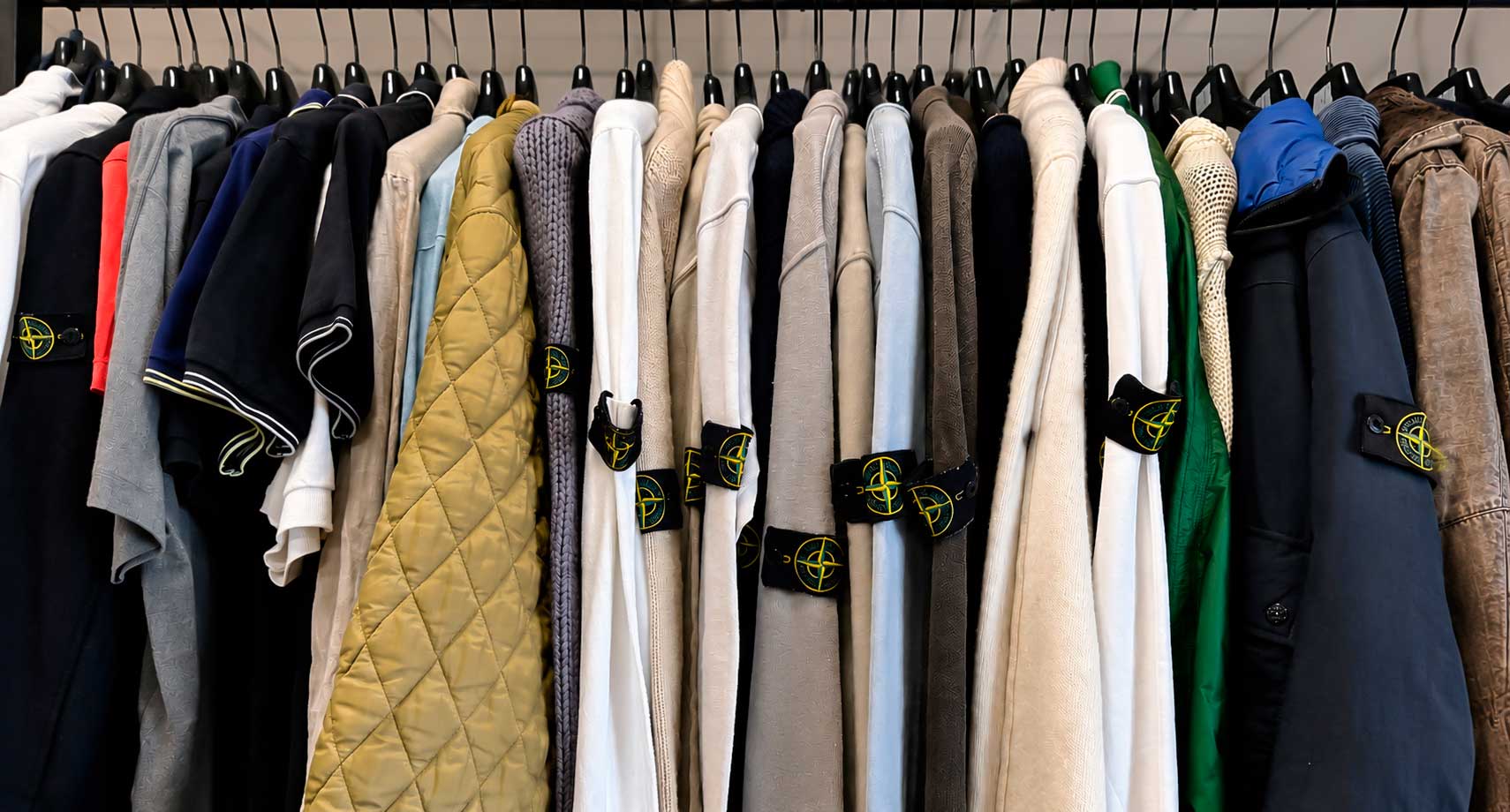
For most of their history, the badge-and-compass jackets of Stone Island and the goggle hoods of C.P. Company were an inside language, spoken fluently on football terraces and in Italian paninari circles, largely invisible to everyone else. That has changed. Technical Italian sportswear built on garment dyeing, military research and fabric experimentation has moved from subculture to the centre of the resale market. For wholesale buyers, that shift is not just a cultural footnote. It is a margin opportunity.
This is a brand spotlight on the three labels that define the category (Stone Island, C.P. Company and Ma.Strum) and a practical look at why they belong in your sourcing plan.
One designer, three brands
You cannot tell this story without Massimo Osti. A graphic designer with no formal fashion training, Osti founded C.P. Company in 1971 (originally Chester Perry, renamed in 1978 after a trademark dispute) and Stone Island in 1982. His method was almost scientific: take military surplus and workwear apart, study how they were built, then re-engineer them with new fabrics and dye processes. The result was clothing that felt lived-in on the first day it was worn.
Two innovations anchor everything that followed. The first is garment dyeing (tinto in capo), which C.P. Company began developing in 1974: dyeing a finished garment rather than the raw cloth, softening it and giving it a naturally worn look. The second is Stone Island’s obsession with fabric treatments: the rubberised tarpaulin of the first 1982 collection, thermosensitive fabric that changes colour with temperature, reflective and rubber-wool textiles. These were not gimmicks. They created garments that behaved unlike anything else on the rail, and they are the reason collectors still hunt Osti-era pieces today.
Ma.Strum is the youngest of the three. Founded in 2008 as a partnership with the Massimo Osti Archive, the fabric-research vault kept by Osti’s son Lorenzo, it carries the same DNA into a British-owned label built on military-inspired, performance outerwear. Its design language of technical fabrics, utilitarian detailing and practical construction makes it the natural third name in any technical-vintage conversation, and an accessible entry point for buyers whose customers want the Osti aesthetic without Stone Island prices.
Why “technical vintage” is going mainstream
Three forces are pulling this category into the open.
Subculture credibility scales well. Stone Island spent the 1980s and 90s embedded in European football-casual culture, where premium sportswear was the uniform. That authenticity is exactly what younger buyers and mainstream fashion now chase: a heritage that cannot be manufactured after the fact. When a brand crosses from the terraces into music and streetwear, the demand curve widens without the origin story losing value.
Scarcity is built into the product. Osti’s seasonal dyeing and limited-run fabrics mean older pieces were never made in large numbers, and many have not survived decades of wear. Natural scarcity plus rising demand is the classic resale equation. Certain archive pieces have become genuinely collectible: the 1989 Stone Island Ice Jacket in woodland camo, for example, can reach around £1,500 on the resale market.
The margins are real. Authentic Stone Island commonly resells at 80 to 150% over cost, with staple crinkle-nylon jackets moving in the roughly $350 to $650 range and black and navy colourways selling fastest. For a wholesale reseller, that spread is the whole point: these are not slow-moving novelty items, they are a category customers actively search out.
What this means for wholesale buyers
Technical vintage rewards buyers who know what they are handling. A few practical points for sourcing at volume.
Learn the tells. For Stone Island, the badge is the headline but not the whole story: construction, dye consistency, the button attaching the badge and fabric composition labels all matter, and reproductions are common at the popular end. For C.P. Company, the Mille Miglia “goggle” jacket, with its lens-fitted hood inspired by wartime protective masks, is the signature silhouette to recognise. Ma.Strum is more recent and therefore easier to authenticate, which is part of its appeal as a volume line.
Condition drives the spread. With garment-dyed and treated fabrics, wear presents differently than on standard cotton. Faded panels and softened hands are often original to the piece rather than damage, but thermosensitive and rubberised finishes can degrade, so grade treated garments carefully and price them by condition tier.
Mix the ceiling and the floor. Archive Osti-era Stone Island and rare C.P. Company sit at the top of the market and sell on story and rarity. Later mainline Stone Island and Ma.Strum give you turnover and broader price points. A healthy technical-vintage offer carries both: hero pieces that draw collectors and depth that keeps everyday resellers coming back.
Buy by the lot, sell by the piece. Sourcing technical outerwear in graded bales lets you spread authentication risk across volume while capturing the per-piece margins the category is known for, provided your grading and quality control are tight.
The takeaway
Stone Island, C.P. Company and Ma.Strum represent one continuous idea, clothing engineered like equipment, now reaching an audience far wider than the subcultures that first understood it. Cultural momentum, structural scarcity and dependable resale margins make technical vintage one of the more resilient corners of the wholesale market heading into the rest of 2026. The buyers who win in it will be the ones who can authenticate quickly, grade honestly and stock both the collector’s grail and the everyday flip.
At addicting.shop we supply European resellers with graded vintage by the bale, including technical outerwear. Browse the catalogue to see current availability, create a wholesale account for tiered pricing, or book a warehouse visit to hand-select your lots in person.